G8800’s and OBS Research

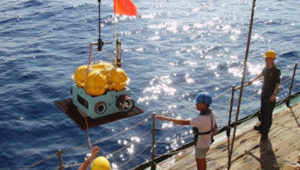
An international research team recently deployed more than 70 Ocean Bottom Seismometer (OBS) Units that feature McLane G8800 flotation in their custom instrument design. The Galicia 3D expedition which set sail from Vigo, Spain explored the ancient continental breakup west of Spain and will produce 3D seismic maps to locate the boundary between the continental

ITP Continues Role in Arctic

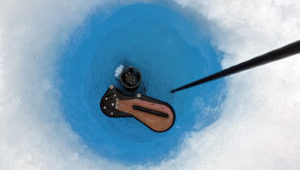
An ice-tethered profiler (ITP) is shown just before passing through four meters of ice in the Beaufort Sea to study of ocean physics, biology, and chemistry beneath the sea ice. ITPs remain an integral part of the National Science Foundation’s continuing Arctic Observing Network (AON). Led by WHOI biologist Sam Laney and first deployed in
(Falmouth, MA) – McLane delivered a Remote Access Sampler (RAS) and a Phytoplankton Sampler (PPS) for use in the Ocean Observatories Initiative, Regional Scale Node (OOI-RSN) cabled system. These samplers will be part of the VISIONS’13 expedition that departs Seattle, WA in July for the International District Hydrothermal Vent Field. Cabled capabilities in both instruments provide two

June 10-14 Planktonic Workshop

Scientific Committee on Oceanic Research (SCOR) members are developing a study on modern planktonic foraminifera research over the last decades.The committee began the project in September 2011 and an upcoming June 10-14 meeting in Amsterdam will bring together experts to further discuss current techniques. The McLane Sediment Trap  is one of these well-known methods. A statement documenting benefits and limitations of these collection methods is
TOP