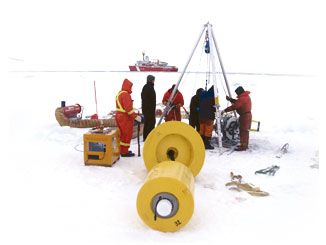
McLaneTerm, the terminal emulation program developed by McLane, recently demonstrated the power of its remote connection tool when McLane instruments in  Antarctica successfully connected with McLane engineers in East Falmouth, MA. The remote connection was established from a McMurdo station Long-Term Ecological Research (MCM LTER)  site during preparation for an upcoming deployment under the ice

Shipboard IFCB Enhances Ecosystem Modeling

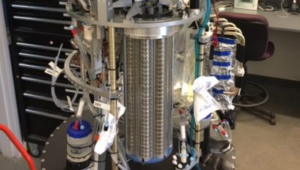
Shipboard Imaging FlowCytobot (IFCB) sampling was successfully conducted onboard the NOAA ship Bell M. Shimada for the 2019 Integrated Ecosystem and Pacific Hake Acoustic-Trawl Survey (the “Summer Survey”). The IFCB was installed to determine whether automated imaging flow cytometry could provide phytoplankton community structure metrics while the ship was underway. These metrics are a key

Prawler in the Field

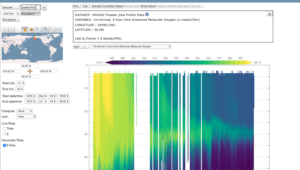
Experience Prawler data on-line from moorings in NASA deployments during 2012/2013 and 2016/2017  in the Salinity Processes in the Upper Ocean Regional Study (SPURS) deployments. The Prawler was the primary instrument on these deployments collecting data to examine the salinity balance in the upper ocean. Prawler data is well-established: critical data collected by this innovative
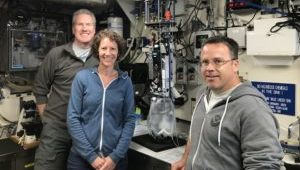
(Falmouth, MA) – In collaboration with McLane Research Laboratories, the Anderson Lab of Woods Hole Oceanographic Institution (WHOI) and the Roesler Lab in the Department of Earth and Oceanographic Science at Bowdoin College,  have simultaneously deployed a McLane Environmental Sample Processor  (ESP) and an Imaging FlowCytobot (IFCB) side by side in the flowing seawater laboratory at the Bowdoin College Schiller Coastal Studies Center on Orr’s
TOP