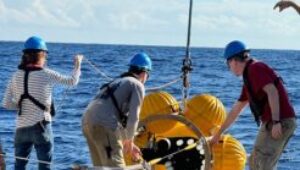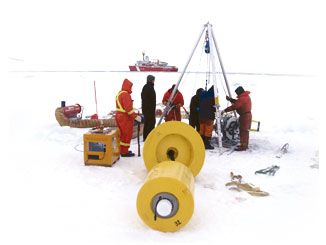
Forty-seven miles southeast of Bermuda in the Sargasso Sea, the Oceanic Flux Program (OFP) mooring observatory continues to build the world’s longest uninterrupted time-series particle data study. Spanning nearly five decades, the project led by the Marine Biological Laboratory (MBL) and the Bermuda Institute of Ocean Sciences, features samples collected by three McLane Sediment Traps
This summer, two Imaging FlowCytobots (IFCBs) will travel aboard multiple research vessels as part of Alaska’s AOOS Harmful Algal Bloom (HAB) Network. From June 11 to September 20, the instruments will follow different routes on varying vessels, continuously capturing high-resolution images of microscopic plankton. The data will support ongoing research and help provide early warnings
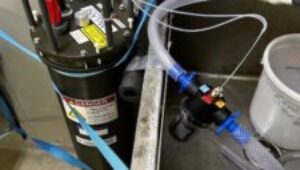
April 14, 2025 (Falmouth, MA) – McLane Research Laboratories, announces the launch its newest environmental DNA (eDNA) collection instrument, the Suspended Particulate Rosette sampler (SuPR). SuPR autonomously collects 14 individual, high volume particulate samples onto 142 mm membrane filters. Depth-rated to 5,000 m, SuPR can pump up to 2000 liters per sample (depending on filter
The University of Connecticut Rankin Seawater Lab in the Department of Marine Sciences (DMS) has launched their Imaging FlowCytobot (IFCB) Dashboard, bringing high-resolution imaging of marine microorganisms to a growing collection of public IFCB dashboards.  Aptly called “IFCB-TV”,  the live-feed allows viewers to explore the thousands of microscopic plankton images captured hourly by the IFCB.
TOP